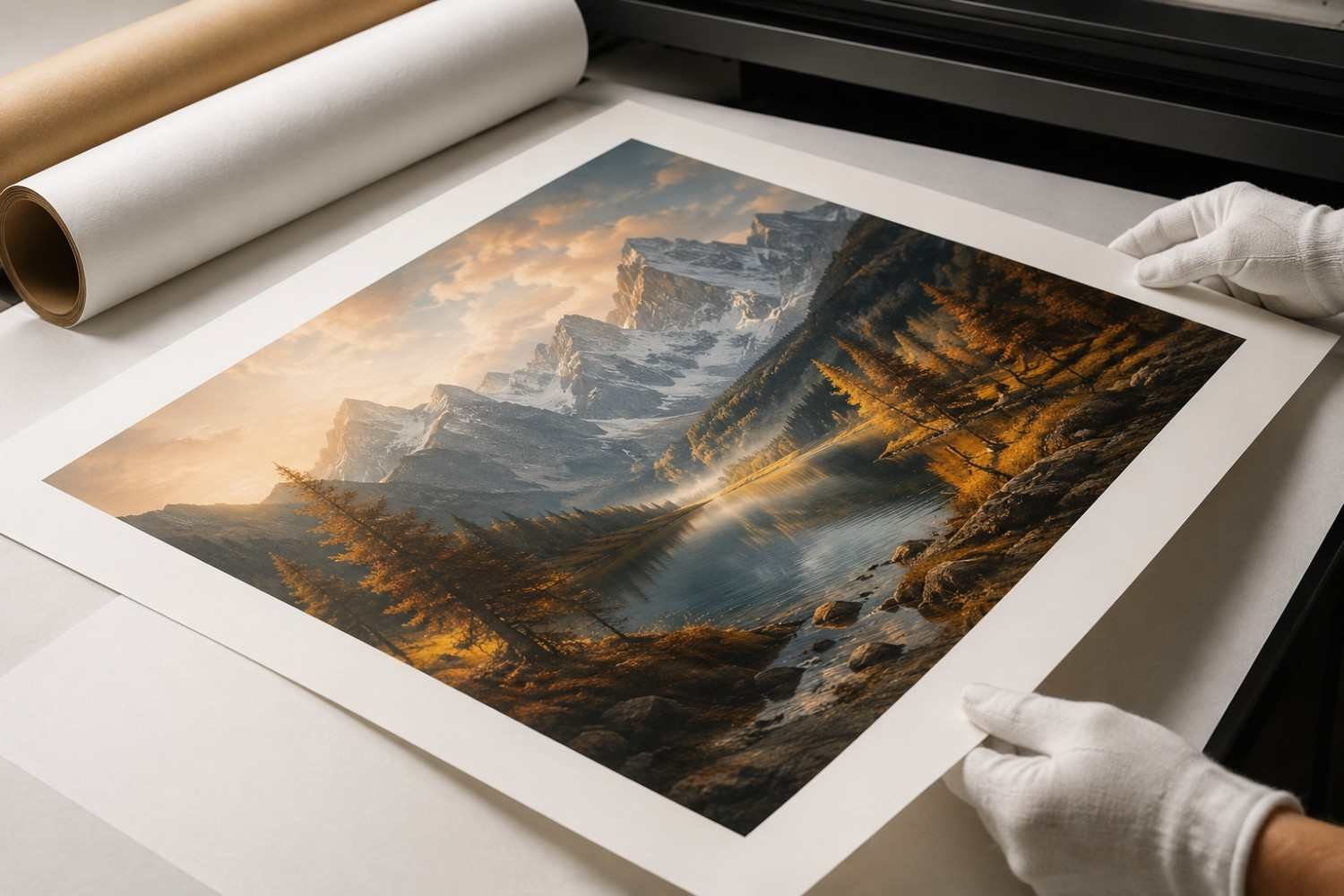


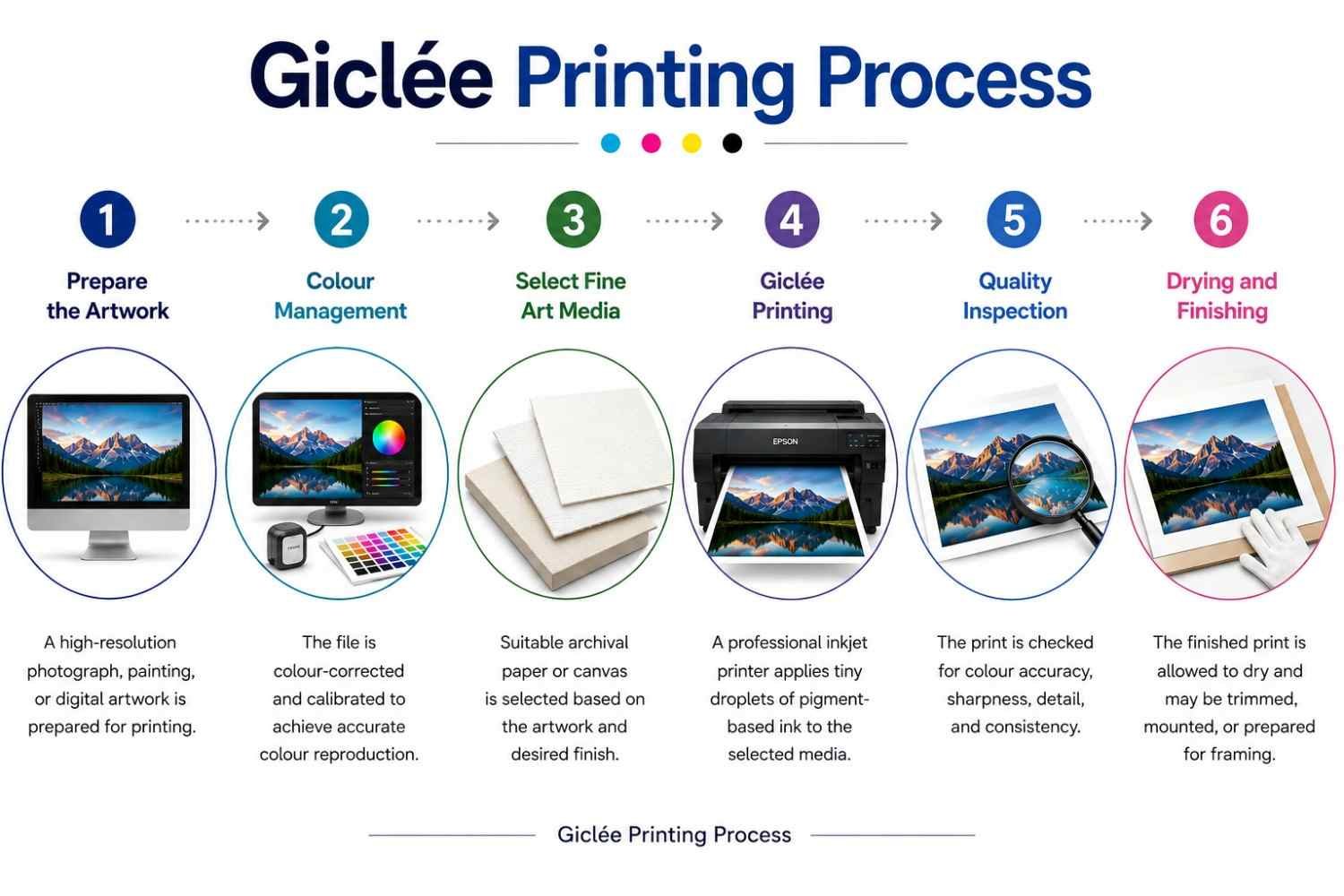
The Giclée Printing process uses high-resolution digital images, archival-quality inks, and fine art papers to produce detailed, long-lasting prints. The process typically involves these steps:
- Step 1: Prepare the artwork – A high-resolution photograph, painting, or digital artwork is prepared for printing.
- Step 2: Colour management – The file is colour-corrected and calibrated to achieve accurate colour reproduction.
- Step 3: Select fine art media – Suitable archival paper or canvas is selected based on the artwork and desired finish.
- Step 4: Giclée printing – A professional inkjet printer applies tiny droplets of pigment-based ink to the selected media.
- Step 5: Quality inspection – The print is checked for colour accuracy, sharpness, detail, and consistency.
- Step 6: Drying and finishing – The finished print is allowed to dry and may be trimmed, mounted, or prepared for framing.
Must Read – What is Giclee Printing and What are its benefits
This Fine Art Printing process creates highly detailed prints with rich colours, smooth tonal transitions, and excellent archival longevity.