An art reproduction is a legally produced copy of an original artwork, created using digital printing, traditional printing, or hand-painting to closely replicate the appearance of the original without being the original artwork itself.
Art reproductions make famous and contemporary artworks accessible without the cost of owning the original. They range from museum-quality giclée prints and hand-painted replicas to affordable posters and canvas prints. Quality depends on image resolution, archival pigment inks, premium substrates, and proper finishing. Limited editions with a Certificate of Authenticity (COA) generally hold more value than open editions.
Key Takeaways
Art reproductions make original artworks accessible at a lower cost.Giclée prints offer the highest quality among digital reproductions.Original fine art prints are not the same as mechanical reproductions.Archival pigment inks and museum-grade cotton rag improve longevity.Limited edition runs with a COA are generally more collectible.Always buy from authorized sources to avoid copyright issues.Verify technical specifications instead of relying on marketing claims.Choose artwork sizes that cover roughly 60–75% of your available wall space for the best visual impact.
What Is an Art Reproduction?
An art reproduction is a copy of an existing artwork created to preserve its visual appearance. The goal is to replicate the colors, composition, and details of the original as accurately as possible.
Art reproductions are widely used by:
- Art collectors
- Interior designers
- Museums
- Galleries
- Hotels
- Corporate offices
- Homeowners
- Educational institutions
Unlike an original artwork, a reproduction is produced after the original has already been created. The reproduction may be printed digitally, produced through commercial printing, or recreated by a skilled copy artist.
Art Reproduction vs Original Artwork
| Feature | Original Artwork | Art Reproduction |
| Created by | Original artist | Printing process or copy artist |
| Quantity | Usually one | One or many copies |
| Texture | Original brushstrokes | Depends on reproduction method |
| Price | High | Affordable |
| Investment potential | Highest | Varies by edition |
| Authenticity | Original creation | Copy of original |
Art Reproduction vs Original Fine Art Prints
This is one of the most misunderstood areas in the art market.
| Mechanical Reproduction | Original Fine Art Print |
| Produced from a digital file or photograph | Created directly from the artist’s handmade printing plate, stone, woodblock, or screen |
| Can have unlimited copies | Usually limited edition |
| Includes giclée prints, canvas prints, offset prints | Includes lithographs, etchings, woodcuts, linocuts, engravings, screen prints |
| Primarily reproduces existing artwork | Considered an original artwork within printmaking |
| Lower collectible value (unless limited edition) | Higher collector value |
Original Fine Art Print Examples
- Lithograph
- Etching
- Woodcut
- Linocut
- Engraving
- Screen Print (Serigraph)
These are original artworks, even though multiple impressions exist.
4 Main Types of Art Reproductions
1. Giclée Prints
Giclée printing is the highest standard of digital fine art reproduction.
Features
- Uses 8–12 archival pigment inks
- Prints at extremely high resolution
- Excellent color accuracy
- Museum-grade precision
- Printed on premium archival papers or canvas
- Long lifespan under proper display conditions
Best for:
- Fine art collectors
- Galleries
- Museums
- Professional photographers
2. Hand-Painted Replicas
Hand-painted replicas are recreated manually by skilled artists using oil or acrylic paint.
Features
- Real paint application
- Visible brushstrokes
- Natural texture
- Each copy is slightly unique
- Requires significant labor
Best for:
- Traditional interiors
- Classical art lovers
- Decorative installations
3. Canvas Prints
Canvas prints reproduce digital artwork directly onto canvas material.
Features
- Printed on cotton-poly or cotton canvas
- Can be gallery wrapped
- Lightweight
- Ready to hang
- Available in many sizes
Best for:
- Home décor
- Offices
- Hotels
- Restaurants
4. CMYK Digital Prints / Posters
These are commercial reproductions produced using four-color printing.
Features
- Standard CMYK inks
- Economical production
- Thinner paper
- Non-archival materials
- Suitable for short-term display
Best for:
- Students
- Temporary decoration
- Promotional displays
Must Read – Why DPI Matters in Museum Quality Printing
A premium art reproduction should closely resemble the original while maintaining long-term durability.
How to Judge the Quality of an Art Reproduction
A premium art reproduction should closely resemble the original while maintaining long-term durability.
Quality Checklist
| Quality Factor | High-End Reproduction | Low-End Reproduction |
| Resolution | 300 DPI or higher | Below 200 DPI |
| Ink Type | Archival pigment inks (e.g., UltraChrome HD) | Dye-based inks |
| Paper | Museum-grade 100% cotton rag | Wood pulp paper |
| Canvas | Heavyweight archival canvas | Thin polyester canvas |
| Color Accuracy | Wide color gamut | Flat colors |
| Surface Finish | Uniform texture | Uneven coating |
| UV Protection | UV-protective varnish | No protection |
| Longevity | 75–200+ years (proper care) | Few years before fading |
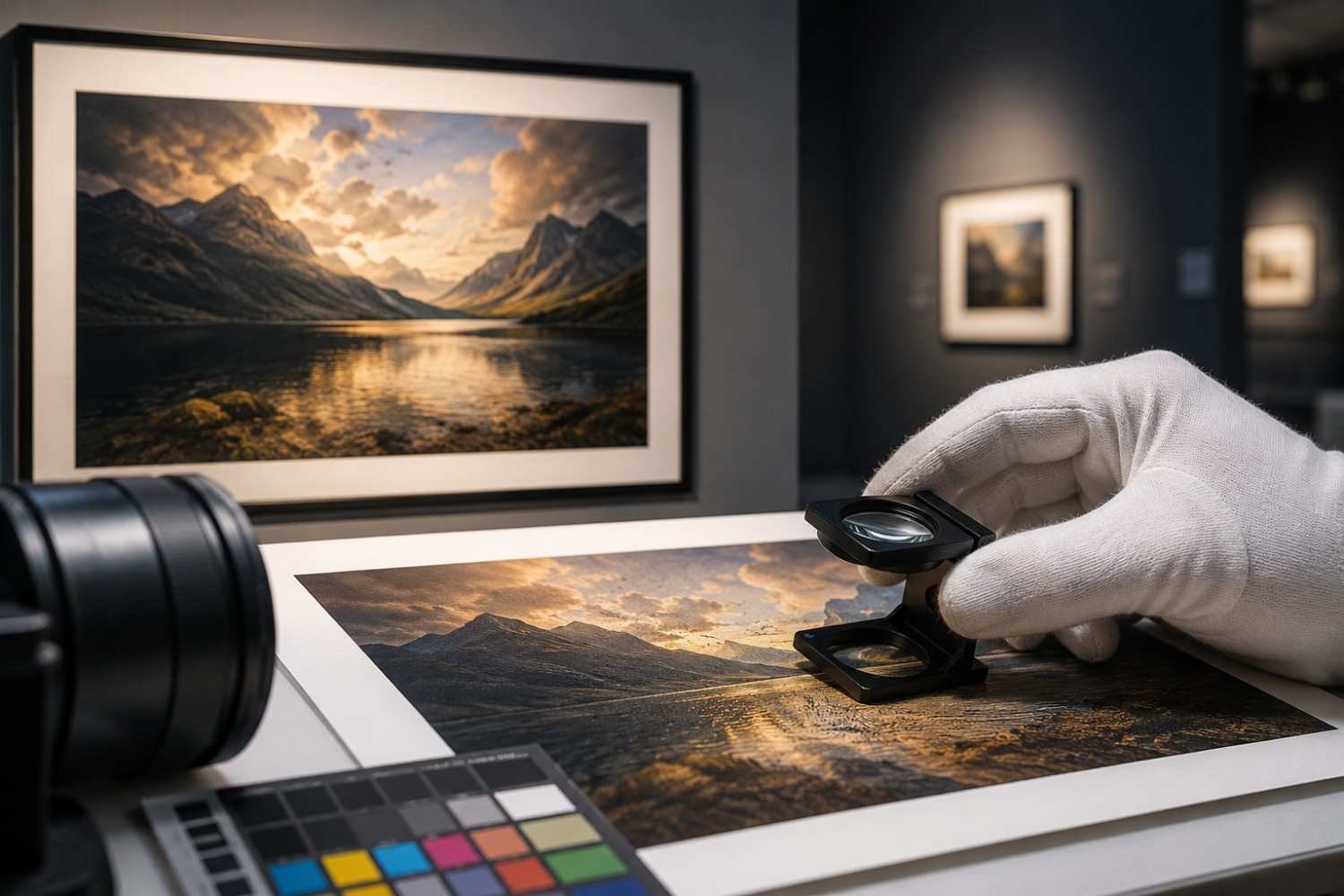
Resolution
High-resolution artwork preserves fine details.Look for:Minimum 300 DPIProfessional color calibrationSharp edgesSmooth gradientsAvoid:PixelationBlurry detailsCompression artifacts
Ink Type
The ink determines longevity.
Premium
Archival pigment inksUltraChrome HDLightfast pigmentsFade resistant
Economy
Dye inksFaster fadingLower UV resistance
Substrate
The printing surface significantly affects quality.
Premium Materials
Museum-grade cotton ragAcid-free fine art paperHeavyweight canvasArchival fiber papers
Lower Quality Materials
Standard poster paperGlossy commercial paperLightweight canvasAcidic paper prone to yellowing
Protective Coatings
A quality reproduction often includes:UV-protective varnishMoisture resistanceScratch protectionImproved color stabilityThese coatings help extend the artwork’s lifespan.
Do Art Reproductions Hold Value?
Yes, but not all reproductions appreciate equally.Limited editions, artist signatures, provenance, and rarity influence resale value far more than open editions.
| Reproduction Type | Secondary Market Value | Primary Value Drivers |
| Open Edition Prints | Low | Decorative appeal, print quality |
| Hand-Painted Replicas | Moderate | Artist skill, craftsmanship, demand |
| Limited Edition Prints | High | Limited edition runs, artist signature, rarity, COA |
| Artist Proofs (A/P) | Highest among reproductions | Scarcity, collector demand, provenance, artist approval |
Factors That Increase Value
Limited edition runsArtist signatureCertificate of Authenticity (COA)High-quality archival printingReputable publisherStrong provenanceExcellent conditionRecognized artist
Factors That Reduce Value
Open edition printingUnknown sourcePoor print qualityFadingWater damageMissing documentationUnauthorized copies
Understanding Copyright and Legal Considerations
Buying a reproduction does not automatically grant copyright ownership.
Intellectual Property Copyright
The original artist usually retains copyright unless it has expired or been transferred.You should only purchase reproductions from:Authorized galleriesLicensed publishersOfficial museum storesArtist-approved distributorsUnauthorized reproductions may infringe intellectual property copyright laws.
What Is a Certificate of Authenticity (COA)?
A Certificate of Authenticity (COA) verifies the legitimacy of an artwork or limited edition print.A quality COA typically includes:Artist nameArtwork titleEdition numberPrint dateSignaturePrinting methodPublisher detailsA COA is especially important for limited edition reproductions.
Open Edition vs Limited Edition
| Feature | Open Edition | Limited Edition |
| Number Printed | Unlimited | Fixed quantity |
| Scarcity | None | High |
| Collectibility | Low | Higher |
| Investment Potential | Limited | Better |
| Certificate of Authenticity | Usually not included | Usually included |